community Service means Business!

15 June 2010

Sunday Secrets

via PostSecret by postsecret on 6/15/10

PostSecret is an ongoing community art project where people
mail in their secrets anonymously on one side of a postcard.

-----Email Message-----

I am fourteen years old. I lost my virginity yesterday. I wish i had waited until i was 26.


-----Email Message-----

I chose to wait until marriage. Now I'm 33, still single, and scared of sex.


See More Secrets. Follow PostSecret on Twitter.


-----Email Message-----

i'm not the girl in this story but as a kid i also suffered the pain
of being bullied. it took a long time but those experiences made me
stronger and turned me into the person i am now: a social worker.
through helping others overcome the misery of their own social hells
i'm healing myself, too. i hope your victim has found some of the
same.


-----Email Message-----

I didn't forgive him for his sake, but to set myself free.
And it worked.


-----Livejournal-----

It could've been worse, he could've read Dianetics or something.


-----Email Message-----

Reading Atlas Shrugged gave me the strength to pull myself out of an eating disorder; it saved my life.


PostSecret Community

-----Email Message-----

I'm a 4th year podiatry student and I just want to say, you should be happy if hairy toes are your worst problem.


This secret from last week sparked a movement

In seven days over 50,000 59,000 of you joined an online community offering encouragement and help.

This hopeful story has received international press coverage including this first report on Time Magazine's NewFeed.

I haven't heard from the person who mailed this postcard, but I have heard from many others who have felt lifted by this world-wide spontaneous act of kindness.


Share


-----Email Message-----

Thank you for creating the "please don't jump" facebook group... I am overwhelmed at the response and truly, deeply hope the author of the postcard is as well. Things have been rough for me, and even though the kind words are meant for another suffering soul, I have drawn strength from following these voices too... I wish there were more examples of this kind of love, hope, and support in our world.


-----Email Message-----

I read the Golden Gate Bridge postcard on PostSecret, visited the facebook page, and went to the bridge today [Sunday]. I have lived in San Francisco for 4 years and never once walked across the bridge. Today me and my roommate did for the first time because of this secret and I wanted to share with you my experience.

We walked about 3/4 across the bridge reading ribbons and messages along the way then decided to head back. On our way back I noticed a backpack against the bridge and thinking this was odd kept staring...soon noticing a person on the other side of the bridge. Me and my roommate stopped and stared over at this man sitting on the ledge of the bridge.

My roommate asked him if he was alright, which he replied "not really" but he stood up. She then asked him if he would come back on our side of the bridge. He climbed back over and we all just stood there awhile. He had a big scar down his neck and had also wet himself sometime sitting out on the ledge. I asked him his name and we introduced ourselves. My roommate asked him if she could call anyone for him and he replied no. He then put on his sweatshirt, grabbed his stuff, and walked away. We stood there watching him and the bridge police and security team pulled up and escorted this man into one of the cars.

I have no idea what is going to happen with this man, where he went, if he will try to jump or some other method again. All I know is today was my first day on the bridge, and because of postsecret and the support of all these individuals, we wanted to be a part of that support and through that we were able to be there for someone.

People do make a difference and even if the person who wrote the post secret has no idea of the effect that it has had, today it helped take someone off the Golden Gate Bridge.


PostSecret on Facebook

-----Email Message-----

Frank,

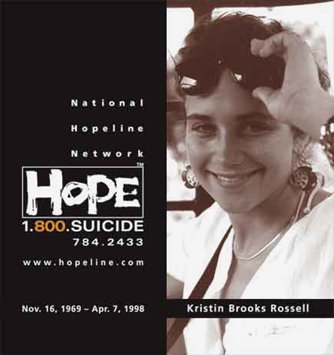
This past Friday night I found myself in a black hole of depression and I didn't know how I was going to make it through the night. Not knowing where to turn and feeling like I couldn't stop. I remembered seeing the Hopeline phone number in the front of your book. I talked with someone there for 2 and a half hours and I truly feel that they saved my life.

Thank you for the book, thank Hopeline for being there, and thank the people that send in their postcards so that others know they are not alone with their secrets.

-Casie (with permission)


Posted via email from the Un-Official Southwestern PA Re-Entry Coalition Blog

The State of the Nation's Housing

via About Homelessness by Catherine on 6/15/10

Today the Joint Center for Housing Studies at Harvard University released their annual State of the Nation’s Housing report – an assessment of the American housing market for the past year.

Overall, the report offered mixed news. In the executive summary - entitled, “The Fledgling Recovery”—the report noted that the economy has started to show indications of a recovering housing market, including increased employment rates and reduced house prices. The report is also careful to note, however, that strength in the housing market will heavily depend on a recovery in the unemployment rate, which is currently holding steady at just under 10 percent.

While the big picture offered some interesting insights, what was most striking in the report [at least for us] was the state of affordable housing for low-income households. The picture may look mixed for the majority of Americans – but the outlook is notably less rosy for low-income households.

It starts with the rental market. Most low-income households are renters and the report definitively states that the supply of low-cost rental housing continues to decline. In fact, housing units considered affordable for those earning the federal minimum wage – rents of $400/month or less - declined by 244,000 units in 2007.

At the same time, the number of renters rose over the last year, in some part because of the pressures in the homeowners market. A significant portion of that of that increase is attributed to minority and immigrant households though the report also notes that elderly renter households will rise dramatically – by more than 3 million – as the baby boomer generation ages.

But the real story is in cost-burdened households.

The percentage of Americans living with severe housing cost burden (paying 50 percent or more of their monthly income on rent) stayed at a steady 12 percent for two decades – from 1980 to 2000. In 2008, that percentage shot up by a third to 16 percent. According to the report, a record 18.6 million households faced severe housing cost burdens this year – an increase of 4.7 million since 2001.

Sadly, the group most affected by severe housing cost burden is single-parent families with children. These households require more – more space, safer neighborhoods, better schools – but are restricted by a single-income. In 2008, half of low-income single-parent households spent 63 percent of their monthly income on housing. Minority households often spent more.

The story doesn’t improve from there. The housing report goes on to highlight other challenges presented to low-income and cost-burdened households. It’s a song that’s been sung before: affordable housing grows scarcer and scarcer and real incomes stay ever more stagnant.

Perhaps the most resonating message from this section of the report, however, is the rigid persistence of housing cost burdens over the years. Many economic indicators fluctuate; there are often breaks in data reflecting changes in the financial market, world events, or a shift in industry.

This is not the case for severe housing cost burden. Since the 1960s, the report notes, housing cost burden for the bottom income quartile has only become more and more severe.


The connection to homelessness couldn’t be clearer: as individuals and families struggle to cope with an ever-bleaker affordable housing landscape, the risk of homelessness grows. In order to prevent and reduce homelessness, we must – with great urgency – address the clearly critical need for more affordable housing.

For the full report, please visit the Joint Center for Housing Studies website. For more information about the relationship between homelessness and housing, please visit ours.

Posted via email from the Un-Official Southwestern PA Re-Entry Coalition Blog

stepping carefully

via scatterplot by olderwoman on 6/15/10

Yesterday I had an email exchange with a local conservative politician & blogger. I realized I was concerned to be careful not to say anything that could be pulled out of context. He originally asked (in less than polite language) a not-unreasonable question about whether statements about incarceration rates considered arrest rates, so I sent him the appropriate tables with an offer to explain the data. He responded without even looking at the data with an ill-worded and hostile question asking me to say whether this is all a matter of Black criminality or all a matter of “scapegoating whites.” I responded by complaining about his false dichotomy and inflammatory language and explaining (at length) about the complexity of the issue and the nature of the relevant data. I stressed that assessing the balance of “differential crime” and “unfair treatment” is difficult and that people working on the issue offer proposals both to address the sources of crime and to address the treatment in the system. I got back another less-insulting but still oversimplified dichotomized question about whether it is just a matter of people being punished unfairly or not, so I responded by saying that I believed my previous reply had already addressed that question. I was afraid that any attempt to answer his over-simplified question would just make its way into an ill-informed blog post. Sigh. This whole society has degenerated into slogan-slinging. We’ve reached the point where trying to address issues in a reasoned and nonconfrontational way is, itself, attacked. Ugh.

What makes this so hard is that racism is, of course, one of the central problems. Racism impacts the conditions that foster crime as well as the treatment of people by the criminal justice system. And “crime” is a heterogeneous category. I read the evidence as saying that the racial differences in arrests for serious crimes probably roughly track racial differences in doing the crimes, while there is a huge racial gap in your chances of getting arrested for a drug offense or a lesser crime (like disorderly conduct, vandalism, theft). It is very hard to keep a moral focus about the importance of the issue and the problem of race while also pushing past over-simplified dichotomies about what is going on.


Posted via email from the Un-Official Southwestern PA Re-Entry Coalition Blog

11 June 2010

The First Amendment and the Principles of Public Opinion, by Bryan Caplan

via EconLog on 6/10/10

Three principles of public opinion I've pushed over the years:

1. The status quo is popular.  Well-worded questions usually show that the median person favors the status quo, exactly as the Median Voter Model predicts.

2. Liberty is more popular at an abstract level than it is for specific policies.

3. If anything, policy is more libertarian than the public wants.

When I was preparing my FEE lecture on "Public Opinion for Libertarians," I had a chance to test these three principles on public opinion about the First Amendment.  Do generalizations based mainly on public opinion about economics extend to civil liberties?  It's a nice "out of sample" robustness check.

The best source I could find was the First Amendment Center's State of the First Amendment Survey.  Let's take a look at the 2007 edition.  What do we see?  (All responses are for 2007 unless stated otherwise).

1. Two questions are ideal for testing my claim that the status quo is popular.  Question 10 asks:

Overall, do you think the press in America has too much freedom to do what it wants, too little freedom to do what it wants, or is the amount of freedom the press has about right?
Question 11, similarly, asks:
Even though the U.S. Constitution guarantees freedom of religion, government has placed some restrictions on it. Overall, do you think Americans have too much religious freedom, too little religious freedom, or is the amount of religious freedom about right?
The results: The median respondent says "about right" to both questions in every year covered - 1997-2007.  Support for free speech bottomed out in 2003, the one year where "too much freedom" was a more popular answer (46%) than "about right" (43%).  But support for the status quo remained the median.

2. At the most abstract level, there is overwhelming support for civil liberty.  In 2007, 98% considered "the right to speak freely about whatever you want" to be "essential" or "important," and 97% thought the same about "the right to practice the religion of your choice."  Even "the right to no religion" was deemed "essential" or "important" by 89%.

Still, the public sounds much less libertarian when asked about more specific issues.  Only 60% agree that "Newspapers should be allowed to freely criticize the U.S military about its strategy and performance" and that "People should be allowed to say things in public that might be offensive to religious groups."  Only 56% agree that freedom of religion, "Applies to all religious groups regardless of how extreme their beliefs are."  Just 55% agree that, "Musicians should be allowed to sing songs with lyrics that others might find offensive." 

3. While the median respondent broadly endorses the status quo, there are a few discrepancies between what we've got and what we want.  As far as I can tell, all discrepancies are in the direction of freedom.  Fully 56% disagree with the view that, "People should be allowed to say things in public that might be offensive to racial groups."  Yet neo-Nazis still have free speech.  More amazingly, 61% agree that "The government should be allowed to require newspapers to offer an equal allotment of time to conservative and liberal commentators."  Last but not least, 71% agree that "The government should be able to place restrictions on the amount of money a private corporation or a union can contribute to an election campaign."  The Citizens United decision is clearly more freedom of speech than the public would allow.

Overall, my three principles of public opinion work as well for civil liberty as they do for economic liberty.  Once again, libertarians should count ourselves lucky.  If the government truly started listening to the people, that would be a sad day for freedom.

Posted via email from the Un-Official Southwestern PA Re-Entry Coalition Blog

21 May 2010

Rick Casey on Juvenile Sentencing

via The StandDown Texas Project by Steve Hall on 5/21/10

His column in today's Houston Chronicle is, "That liberal legislature ... in Texas."

The U.S. Supreme Court on Monday barred sentences of life without parole for juveniles who committed crimes other than murder. The vote was 5-4.

This will surprise a lot of Texans — and even more outsiders — but a year ago the Texas Legislature went the Supreme Court one farther.

It barred sentences of life without parole for juveniles who commit capital murder.

And the vote wasn't even as close as the Supreme Court's.

The Senate passed the bill 30-1. The House passed it 124-21, a ratio of 6-1.

And Gov. Rick Perry signed it.

This is a rare case of the U.S. Supreme Court following Texas, not vice-versa.

The Supreme Court gave hope to 129 prisoners serving sentences of life without parole for crimes they committed as juveniles, but not a single one was in Texas. In Texas, life without parole is only given in capital murder cases.

We do have 20 juvenile offenders serving life without parole for capital murders, who were saved when the U.S. Supreme Court in 2005 ruled, 5-4, that the death penalty could not be given to those who were under 18 when they committed a crime. Of the 20, three were 15 when they committed capital murder. Four were 16 and the rest 17.

Under a Texas law that covered all capital murders, the only punishment available other than death was life without parole. Sen. Juan Hinojosa (D-McAllen) carried last year's bill, arguing that science had shown that teenagers were not mentally and emotionally fully developed and should not be classified as being beyond rehabilitation.

The law is not exactly lenient. It requires that convicts serve a full 40 years, with no reduction for good behavior, before they are even eligible for parole. What's more, it doesn't help those 20 already in prison, since it applies only to crimes committed after last Sept. 1.

And:

Defense lawyers are already talking about asking the Supreme Court to bar life without parole for juveniles convicted of murder.

It's not hard to imagine them arguing that if the Texas Legislature bans it, then it must be outside of societal norms.

Earlier coverage of the Graham v. Florida ruling begins with this post.  There's been almost universal praise for the ruling from editorial boards across the nation.  Later today, I'll link to the editorial coverage.

Posted via email from the Un-Official Southwestern PA Re-Entry Coalition Blog

Detroit City Counsel to make a victim impact statement in sentencing of form...

via Sentencing Law and Policy by Doug B. on 5/21/10

This local article, which is headlined "City Council Writing Victim Statement: Council's Statement To Be Read At Ex-Mayor's Sentencing," reports on an intriguing example of victim input in a high-profile sentencing. Here are the basic details:

Members of the Detroit City Council want their voices heard next Tuesday in the form of a victim impact statement when former Detroit Mayor Kwame Kilpatrick is sentenced for probation violation.

Council members were meeting with attorney William Goodman Friday to draft the statement. Goodman represented the council when it tried to force Kilpatrick from office before he resigned.

Council members said they want the statement, which will spell out the damage they say Kilpatrick has caused the city, to be read before his sentencing in Wayne County Circuit Court next Tuesday morning.

The Michigan Department of Corrections has said it already has finished Kilpatrick's pre-sentencing report.

Last month, Groner ruled that Kilpatrick violated terms of his probation by failing to report assets and turn over tax refunds toward restitution owed the city. Kilpatrick pleaded guilty in 2008 to misconduct tied to his lying under oath about an affair with a staff member in a whistle-blowers' lawsuit. He served almost four months in jail, agreed to give up his law license and his political career and repay the city $1 million for settling an employment lawsuit related to his misdeeds.

He had been making monthly payments of $3,000 while living in the Dallas area and working as a salesman for information-technology company Covisint.

In February, Groner ordered the stepped-up payments of $79,000 within 30 days and another payment of $240,000 within 90 days after a contentious six-day hearing, spanning from October to December -- which was triggered by Kilpatrick’s claim that he had only $6 a month left after living and family expenses in his new home in Southlake, Texas.

During the hearings, prosecutors revealed Kilpatrick and his wife had hidden assets; put money in other accounts, including $240,000 in loans; live in a rented mansion; and drive fancy SUVs....

Kilpatrick's attorney Michael Allen Schwartz has said he doesn't believe Kilpatrick should serve jail time because that would impede his ability to work and pay back the city.

Posted via email from the Un-Official Southwestern PA Re-Entry Coalition Blog

Two Women Arrested For Allegedly Smuggling Crystal Meth In Bible [Oh Christ]

via Jezebel by Dodai on 5/21/10

The ladies were trying to give the meth-filled Holy Book to a man in prison. The dude's been jailed since October… for drug-related crimes. Maybe he was confused about the concept of "higher" power? [SF Gate] More »


Methamphetamine - Drugs - Prison - Health - Substance Abuse

Posted via email from the Un-Official Southwestern PA Re-Entry Coalition Blog

Global Tel Link Opinions.

via Prison Talk by MizSunshine on 5/21/10

Now that I'm drawing to an end with having to deal with GTL, I have to overall say that I have surprisingly few complaints with my prepay account.

I was initially frustrated, because I could NOT set up my account using the automated system when I received my first phone call, it kept declining my card.

I was finally able to get through to Customer Service who set my account up and did the first charge. I should have been able to use the Automated System after that, but I can't - it declines through there, but if I speak to a person, it always goes through. Annoying that I can't do it at my convenience, but I still get the money on the phone.

On two occasions, my calls were terminated due to "3rd Party Calls", when I was doing nothing but sitting here having a conversation. Annoying, but he was able to call right back and continue as normal. Both times I called GTL and received a credit back to my account for the ENTIRE CALL within 4 days, after the calls were reviewed by staff and it was proven that I wasn't using 3way calling.

Staff has always been pleasant and adding money to my account with them, as well as dealing with the 2 terminated calls has been easy and stress free. There is one man named Kwan who I've somehow managed to get on the phone at least 5 times and he always apologizes for my issues with the automated system, and we joke about it.

It is VERY expensive ($5 for 15 min), and I am glad to not have to deal with it soon, as VConnect will be so much cheaper, but overall I'm satisfied. I can talk to my loved one daily and all issues have been solved politely and promptly. Which has been a HUGE relief after some of the horror stories I've read here.

I am looking forward to cheaper calls soon, and hopefully the actual service and customer service with VConnect will be as nice as with GTL.

And I hope that people start getting treated as well as I have by GTL, because I am very surprised my experience has been a good one!

Posted via email from the Un-Official Southwestern PA Re-Entry Coalition Blog

VA Gov Vows Faster Action To Restore Some Felons’ Voting Rights

via The Crime Report by tedgest on 5/21/10

Nonviolent felons must now wait two years, instead of three, after completing their sentences to apply to have their right to vote restored in Virginia, Gov. Robert McDonnell announced as he outlined a faster rights-restoration process, reports the Washington Post. McDonnell pledged that his office will act on applications from felons wanting to have their civil rights restored within 60 days of receiving the necessary paperwork from courts and other agencies, a significant acceleration of the process from past governors.

He said he would form a work group to find ways to get courts and probation officers to submit the necessary documents more quickly, a traditional hang-up of the process. In 39 states, voting rights are automatically returned to felons who have completed their sentences. Only Kentucky and Virginia permanently revoke rights upon conviction and leave restoration entirely at the discretion of the governor. McDonnell faced criticism from civil rights groups and others after about 200 nonviolent felons who had applied for rights restoration since he took office Jan. 16 received a notice from his office indicating that he was instituting a new policy requiring them to write a letter explaining their community involvement and justifying their request.

Posted via email from the Un-Official Southwestern PA Re-Entry Coalition Blog

Talk2Me

be here-Now!

into the Gaping Void

My Friend Flickr

Talk Gone Wrong

Drop-off Box

drop.io: simple private sharing
Powered By Blogger

plan2planet

Blog Archive