community Service means Business!

7 January 2008

Brand Autopsy: McDonald's battles Starbucks


McDonald's battles Starbucks

Sensing an opportunity to further democratize espresso, McDonald's is moving full throttle into the espresso beverage business. Currently, 800 of McDonald's U.S. locations offer lattes, cappuccinos, and frappes. By 2009, most U.S. McDonald's locations will be selling coffee drinks ranging in price from $1.99 to $3.29. McDonald's believes an expanded coffee menu will add about $1-billion in yearly sales.

Writing in the Wall Street Journal
, Janet Adamy reports,

The program attempts to replicate the Starbucks experience in many ways -- starting with borrowing the barista moniker. Espresso machines will be displayed at the front counters, a big shift for a company that has always hidden its food assembly from customers. McDonald's says it wants customers to see the coffee beans being ground and baristas topping the mochas and Frappes with whipped cream.

"You create a little bit more of a theater there," says John Betts, McDonald's vice president of national beverage strategy.


The theater element, of having employees preparing food while interacting with customers, is a major shift in company culture for the operationally-efficient McDonald's system. In the article, Adamy mentions how McDonald's franchisees have been instructed to hire people who are "very friendly."

That's a start to bringing more theatrics to a customer's McDonald's experience, but why is hiring "very friendly" people a new behavior for McDonald's? (Hmm.)

The people component to delivering customer experiences is ultra-important to McDonald's — more important than the actual coffee beverage program. Why? Because Starbucks competitors can replicate products and programs, but they can't replicate people...More

6 January 2008

The stories of Allied Barton Guards


http://www.jwj.org/news/media/video/philly_guards.html


SITTING BEHIND THE DESK: THE STORIES OF ALLIED BARTON GUARDS

AlliedBarton Security Services is the nation's largest security guard subcontracting company . They employ more than 16,000 of Philadelphia's citizens, more than 90% of whom are African-American.

The POWR (Philadelphia Officers and Workers Rising) Campaign is a project of Philadelphia Jobs with Justice aimed at winning fair treatment and dignity for AlliedBarton guards at Philadelphia-area colleges. You can read more about the campaign here.  

Watch video.

Some of Gang's Killings Race-Based - washingtonpost.com

In L.A., Latinos Targeted Blacks

By Thomas Watkins
Associated Press 
Sunday, January 6, 2008; Page A02

LOS ANGELES -- In a murderous quest aimed at "cleansing" their turf of snitches and rival gangsters, members of one of Los Angeles County's most vicious Latino gangs sometimes killed people just because of their race, an investigation has found.

Authorities said there were 20 homicides among more than 80 shootings documented during Florencia 13's rampage in the hardscrabble Florence-Firestone neighborhood, exceptional even in an area where gang violence has been commonplace for decades. Officials did not specify the time frame or how many of the killings were racial.

There were even instances in which Florencia 13 leaders ordered killings of black gangsters and then, when the intended victims couldn't be located, said, "Well, shoot any black you see," according to Los Angeles County Sheriff Lee Baca.

"In certain cases, some murders were just purely motivated on killing a black person," Baca said.

Digest Books Above Your Reading Level


http://lifehacker.com/340755/digest-books-above-your-reading-level


If you've ever felt flummoxed by the rhetoric in more "advanced" level books, it might be a good idea to employ some equalizing techniques so that you can understand what it is that you're reading. Blogger Ryan Holiday says that the best thing you can do is to remember that you're reading for no one else but yourself. While some bibliophiles would disagree, Ryan says that you might want to ruin the ending to understand the specific themes to be discussed throughout the book. Also, check out reviews to find out what's important to other readers. While reading, if you're confused with a word, look it up. Highlight important passages and take notes.

Before you close the book for good, review your notes once again. Additionally, if you want to broaden your knowledge in a particular subject matter, read related books (often found in the bibliographies themselves). Start connecting what you've read with your everyday life. Ryan says that applying these skills has caused him to "leap years ahead" of his peers. What tricks do you utilize when reading complex books?

AIDS Patients Face Downside of Living Longer - New York Times


LINK TO ARTICLE

AIDS Patients Face Downside of Living Longer

Published: January 6, 2008

CHICAGO — John Holloway received a diagnosis of AIDS nearly two decades ago, when the disease was a speedy death sentence and treatment a distant dream.

Yet at 59 he is alive, thanks to a cocktail of drugs that changed the course of an epidemic. But with longevity has come a host of unexpected medical conditions, which challenge the prevailing view of AIDS as a manageable, chronic disease.

Mr. Holloway, who lives in a housing complex designed for the frail elderly, suffers from complex health problems usually associated with advanced age: chronic obstructive pulmonary disease, diabetes, kidney failure, a bleeding ulcer, severe depression, rectal cancer and the lingering effects of a broken hip....MORE

5 dangerous things you should let your kids do (video)


http://www.ted.com/index.php/talks/view/id/202


About this Talk: Video 9min: 20sec.

Gever Tulley, founder of the Tinkering School, talks about our new wave of overprotected kids -- and spells out 5 (and really, he's got 6) dangerous things you should let your kids do. 

Allowing kids the freedom to explore, he says, will make them stronger and smarter and actually safer.

This talk comes from TED University 2007, a pre-conference program where TEDsters share ideas.

5 January 2008

Kevin Kelly -- Cool Tools


http://www.kk.org/cooltools/archives/cat_communications.php


Free phone 411


The number is 1-800-Free 411, and it's pretty self-explanatory. It's free directory information. Works on cells and land lines. The other day I was about to call a store, and my sister shouted 1-800 Free411 at me as I pulled down her driveway. I dialed it on my cell phone, and gave the name, town, and city. Somewhere in there they air a 12 second commercial, but then they give you your requested number, and even repeat it twice. I haven't experimented yet, but you MAY even be able to circumvent the commercial by pressing "2" on your keypad.

Cell phone companies in MOST parts of the world only charge you for calls you place; incoming calls are free (as they SHOULD be), so I'm annoyed enough when I return to the USA. If I can find a way to keep large corporations from taking more $$ outta my hide, I do it. When cell phone companies charge you up to $2.50 for a directory information request, I'll listen to 12 seconds of blather instead.

-- Duffy Franco

1-800-Free 411
1-800-373-3411
Free411

12 Principles of Animated Video/Life?


http://www.kk.org/cooltools/archives/cat_visual_media.php


Twelve Principles of Animation 

1. Squash and Stretch.
2. Anticipation. This is setting up the action before it happens, usually with a slight movement in the opposite direction to the main one.
3. Staging. This is related to the way the film as a whole is "shot," considering angles, framing, and scene length.
4. Straight-ahead Action and Pose-to-Pose. Straight-ahead action starts at one point and finishes at another in a single continuous movement, such as running, whereas pose-to-pose is a variety of actions in one scene requiring clearly delineated key frames to mark the action's extreme point. How the in-betweens are executed can alter the whole rhythm of the action.
5. Follow-through and Overlapping Action. Follow-through is the opposite of anticipation. When a character stops, certain parts remain in motion, such as hair or clothes. Overlapping action is when the follow-through of one action becomes the anticipation of the next one.
6. Slow In -- Slow Out. This means using more drawings at the beginning and end of an action and fewer in the middle. This creates a more lifelike feeling to the movement.
7. Arcs. These are used to describe natural movement. All actions create circular movements because they usually pivot around a central point, usually a joint. Arcs are also used to describe a line of action through a character.
8. Secondary Action is just that, another action that takes place at the same time as the main one. This may be something as simple as turning the head from side to side during a walk sequence.
9. Timing. This is something that can't be taught. In the same way that comedians who rely on it to get the most from their gags have to learn it through experience, you too will get it right only through practice. Timing is how you get characters to interact naturally. Timing also has to do with the technical side of deciding how many drawings are used to portray an action.
10. Exaggeration. This is the enhancement of a physical attribute or movement, but don't make the mistake of exaggerating the exaggeration.
11. Solid Drawing. This conveys a sense of three-dimensionality through linework, color, and shading.
12. Appeal This is giving personality to the characters you draw. If you can convey it without the sound track, you know you are on the right track.

These are not hard and fast rules, but they have been found to work since the early days of animation. Bear them in mind at the storyboard stage and your animation will definitely have more fluidity and believability.

4 January 2008

Kevin Kelly -- Cool Tools


http://www.kk.org/cooltools/archives/cat_communications.php


Free directory assistance


Directory assistance has always wanted to be free. Since it launched six months ago, Google's foray into phone-based information for business listings has become the easiest, quickest, most efficient free 411 I've used. I'm amazed more people don't have it programmed into their phones. Best part: there are no pre-roll ads. Another well-known option is 1-800-FREE411, but it can take 20 seconds before the "What city and state?" finally arrives. With GOOG-411, the same prompt is delivered in 4 seconds. Time is precious, but even more so if you're on a conservative plan with limited minutes. For that same reason (read: frugality), I'm less inclined to use SMS-based 411 or Google SMS. GOOG-411 also connects your call to the business for free, so there's no need to jot down or memorize any digits. Dialing "411" and paying $2 is like flipping through one of Ma Bell's analog phone books when you've got a connected laptop right in front of you -- an easily-remedied symptom of a bygone era.

-- Steven Leckart

1-800-GOOG-411
Available from Google

Four Types of Government Operatives: Bullies, Muggers, Sneak Thieves, and Con Men: Newsroom: The Independent Institute


http://www.independent.org/newsroom/article.asp?id=2091

Four Types of Government Operatives: Bullies, Muggers, Sneak Thieves, and Con Men 
December 20, 2007
Robert Higgs

Somehow it seemed as though the farm had grown richer without making the animals themselves any richer—except, of course, for the pigs and the dogs.
—George Orwell, Animal Farm
The beginning of political wisdom is the realization that despite everything you've always been taught, the government is not really on your side; indeed, it is out to get you.

For example, for many years, a single congressman from northeastern Pennsylvania—first Dan Flood and then Joe McDade—substantially enriched the anthracite coal interests of that region by inserting a brief, one-paragraph limitation rider in the annual appropriations act for the Department of Defense. The upshot of this obscure provision was that Pennsylvania anthracite was transported to Germany to provide heating fuel for U.S. military bases that could have been heated more cheaply by using local resources. This coals-to-Newcastle shenanigan was a classic sneak-thief gambit, a thing of legislative beauty, but every year's budget contains thousands of schemes that operate with similar effect, if not in an equally audacious manner...MORE


Black-on-Black Thought Crime - The New York Sun


http://www.nysun.com/article/68809

Black-on-Black Thought Crime

  Review of: Sellout: The Politics of Racial Betrayal

By JOHN McWHORTER
Special to the Sun
January 2, 2008

Randall Kennedy has a gift for choosing topics: In four years he has covered perhaps the three most crucial issues in intelligent black discourse. First came "Nigger: The Strange Career of a Troublesome Word" (2002), a bestselling exploration of the N-word; then a book on black-white romantic relationships, "Interracial Intimacies" (2003), and now here is "Sellout: The Politics of Racial Betrayal" (Pantheon, 228 pages, $22), on the tarring of certain black thinkers and figures as Uncle Toms taking a buck to work against the interests of their own people.

Mr. Kennedy, a Harvard Law School professor, is black, and part of what has driven him to write this book is being called a sellout himself on occasion, especially by people claiming that the title of the N-word book inherently condoned the usage of the word itself. Martin Kilson, Harvard's first tenured black professor, proposed that the goal of the book was "to assist White Americans in feeling comfortable with using the epithet."....MORE


3 January 2008

New Participatory Project: Classroom Propaganda of Yesteryear

by Sheldon Rampton on 1/1/08

"Capitalism", a Coronet film, explained the American economy through the story of a corner grocer and kids buying supplies for a wienie roast.

We've started an article on Sourcewatch about Coronet Instructional Films, a company that produced cheesy "social guidance" films in the period following World War II, dealing with topics such as personal hygiene, appropriate dating behavior for teenagers, and American economic and social values. The unintentionally humorous qualities of these films have made them ripe targets for ridicule on Comedy Central's Mystery Science Theatre 3000 and elsewhere. However, they had a serious purpose, according to Ken Smith, who has written a book about what he calls "mental hygiene" films. "Adults were scared," he says. "We forget that nowadays and look back on the '50s as an innocent time. No, parents were scared shitless of the same things they are now. Whether it was how to teach a kid to behave on a date or not to have sex or to drive safely, there was a world full of dangers, and that's why these films exist." In addition to amusement, therefore, studying these films can provide insights into social attitudes as well as the propaganda techniques used to indoctrinate a generation of Americans.

You can help with this research by expanding the article on Coronet Instructional Films or by adding articles about similar filmmakers, such as Sid Davis or the Centron Corporation. Perhaps you'd like to watch one of the films -- many of which can be found online at the Internet Archive -- and add a description, summarizing and analyzing its content. If this is your first time editing on SourceWatch, you can register here, and learn more about adding information to the site here, here and here

Have fun, and thanks for your help!

OP-ED CONTRIBUTOR; Forgotten Step Toward Freedom

via NYT > Slavery by By ERIC FONER on 12/29/07
A significant milestone in American history has gone strangely unnoticed: the 200th anniversary of Jan. 1, 1808, when the importation of slaves into the United States was prohibited.

What compassion and loving kindness is not, Part 5

via The Urban Monk by Albert on 12/7/07

Children’s bedtime stories are the biggest treasure trove of spiritual wisdom. It is right in front of us, in the bookshops, in the arms of the sleeping children, but we ignore them.

The lessons contained within are priceless; but it is saddening. Sometimes, parents who read these stories to their child, they don’t believe in them either. Just nice little stories, they think, to shield them form the real world for as long as possible.

There is one story from my childhood:

A long time ago, there lived an old lady. She was of aristocratic blood, rich, and a big fan of the theater. And every night of the long, dreadful winter, she would take a carriage to the theater, where they made a show of the grandest tragic stories ever written. She would sit inside and cry, shed tears of sympathy, for the fake characters and their fake drama.

And all the while, the carriage driver and the horses, would be sitting outside in the cold. Shivering, hiding from the winds as best they could inside the wooden carriage. And after the show was over, the grand old lady would majestically re-enter her carriage. “Back to the mansion!” she would snap haughtily.

Compassion is not a feeling

What then, is compassion? This is one of the distinctions I struggled to understand – compassion is not a feeling!

Compassion springs forth from the heart; it is the heart, the ocean. It is not just a feeling, feelings are merely ripples. They cost nothing, and they mean nothing.

This is something that western psychologists have often gotten wrong; they’ve categorized compassion as a feeling – a mere emotion! No different from anger, from humor, from pride. These are all fleeting, they’re all based on something that passes away in time. He feels angry; his car has broken down for the third time. Her son won the local basketball tournament, her chest swelled with pride.

And is this what compassion is? Just a mere, fleeting, emotion? You see a child who has fallen, scraped her knee, and you feel a surge of pity. Is that all it is? Something that arises and then disappears, never to be seen again? If that is so – was it even there in the first place?

It is easy to read the story of the grand old lady, and shake our heads. But how many of us have not done the exact same thing she has? That childhood story came to mind simply because I have seen it happen in various guises in others, and in myself.

As Osho said, what do feelings matter, when your house is on fire? A man of feeling will cry and shout while your possessions are burning. A man of compassion will begin moving! He does not waver – it simply has to happen, he simply has to do something. Compassion moves your body - you have no choice in the matter.    MORE.....

Compassion is not just action

More Bliss, Success, and Love? Subscribe for free!

(What does Subscribing / RSS mean?)

Posts you might like:

Arms Trade Spending

via Global Issues on 10/30/07
Updated figures on arms sales between 1999 and 2006 shows that a select few developing countries were again the main focus for arms sales in 2006, although overall sales ($40 billion) that year were slightly down from 2005, the year with the highest sales in the period covered ($46 billion). The top arms sellers throughout this period were the US, Russia, France, United Kingdom, and Germany. The bulk of the sales went to developing countries, mostly to India, China, Saudi Arabia, Egypt, Israel, Pakistan, South Korea, South Africa, and Singapore. Graphs and charts have been updated.

Beginning the Year with Fresh Starts & Modest Changes

via 43 Folders by Merlin Mann on 1/1/08

It was a year ago this month that I decided to try and focus less on New Year’s resolutions and more on what I called “Fresh Starts and Modest Changes.” People tell me they enjoyed the posts on this topic, so I wanted to share them with you again this year. Here’s the series wrapup post, which originally appeared on January 30th of last year.

Series Posts: “Fresh Starts & Modest Changes”

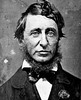
Henry David ThoreauEarlier this month I began a short series of posts and podcasts called “Fresh Starts & Modest Changes.” It was meant as an antidote to the pressure that many of us feel to upend our lives with poorly thought-out new year’s resolutions. The idea was to get you thinking less about the unlikelihood of success in mounting sudden, ginormous change, and more to suggest some subtle adjustments for making life just a bit more pleasant, productive, and your own. Tweaking as you go, instead of trying to treat your mind like some kind of a microwavable corn dog.

We’re getting to the end of the month now, so I wanted to wrap up with a few thoughts on the value of small changes, but I’d also love to hear about any of your own fresh starts and modest changes — particularly hoping you’ll share the ways you’ve had the best success keeping on track with the adjustments you’ve chosen to make.

Why small? Why modest?

As I said in the inaugural podcast of the series, there are most certainly excellent candidates for huge and immediate change in life. Abusive relationships, destructive behavior, and such like are absolutely worth abandoning as quickly as you can, to be sure. But for most of us, it’s tricky to flip a switch and suddenly decide to be someone substantially different from who we have been for years.

Throughout this month, a wonderful quote from Walden has been turning over in my head:

I say, beware of all enterprises that require new clothes, and not rather a new wearer of clothes. If there is not a new man, how can the new clothes be made to fit? If you have any enterprise before you, try it in your old clothes. All men want, not something to do with, but something to do, or rather something to be. Perhaps we should never procure a new suit, however ragged or dirty the old, until we have so conducted, so enterprised or sailed in some way, that we feel like new men in the old, and that to retain it would be like keeping new wine in old bottles. Our moulting season, like that of the fowls, must be a crisis in our lives.

So just as, in this instance, new clothes can be seen as a fancy uniform that won’t produce in its wearer the skills, mind, or experience for their intended vocation, our new year’s resolutions usually leave us feeling like a chump and a failure.

What a mess.

The trick inside the trick

The point, as ever, is that change is not to be found in the play-acting and sense of personal revolution that the resolution — good-natured as its intention may be — demands of us. The real cipher is to just get into the habit of noticing the small things that might bring about outsized improvements in our lives.

Have you ever put up with a squeaky door for years and then one day, for whatever reason, suddenly found yourself grabbing the WD-40 and lubricating that particular nuisance out of your life? I have, and I’m here to tell you, it’s awesome. You actually stand there wondering why you never had the presence of mind to affect such an improvement — ridiculously trivial though its solution may be.

One occasional downside of human wiring is our uncanny ability to tune out anything that’s (apparently) unchanging, consistent, or just not horribly broken. Sure, we’d fix the new hole in our roof the second it started pissing rain on our plasma TV, but we’ll completely space out an inefficiency in our daily email ritual that silently takes an hour out of every working day. We’d call HR if our check didn’t arrive on time, but most of us might never think to try drinking one less latté a week (even though it might, over a year, amount to the equivalent of a day’s pay).

My point is that we’re not particularly well suited to addressing problems until they’ve become big problems. And that’s the point at which we tend to start gnashing teeth, rending garments, and promising the sky that we’ll Be Good if we can just get one more chance to get it right. And, yeah, sometimes we choose New Year’s Eve to make that case to ourselves and to the sky, and, man, is that ever a crummy night to try and suddenly realign your life.

Smaller smaller

When we keep it small, we’re telling ourselves that the problem’s not just us and the problem’s not just the world. We’re admitting that there are simply times when, for whatever reason, our heads get out of the game for a while, and that by allowing ourselves to gently incline back toward what’s really in front of us, we may be able to oil a few of the squeaky doors in our lives. We’re chucking ourselves on the arm and reminding ourselves we’re basically okay and just needing to occasionally wake up and see the stuff that needs our intervention. We’re putting the puppy back on the paper.


Series Posts: “Fresh Starts & Modest Changes”

Does Judgment Trump Experience?

via HBS Working Knowledge on 1/4/08
Published:January 3, 2008
Author:Jim Heskett

The publication of a new book, Judgment: How Winning Leaders Make Great Calls, by Warren Bennis and Noel Tichy warrants attention if for no other reason than the range of experiences that they bring to the topic. The event coincides with an issue that has arisen in the U.S. presidential campaign, an issue of broad relevance: Does judgment trump experience?

At the risk of oversimplification, according to the authors, good judgment is characterized as a process of preparation (sensing and identifying the need for judgment calls, framing and naming the judgment call, and mobilizing and aligning the right people to carry it out), making the judgment call, making execution happen, and learning and continuously adjusting after the call is made. Good leaders use knowledge of self as well as that of social networks, stakeholders, and the organization. The authors don't believe that judgment comes naturally. But they are sure it can be learned, even though they aren't sure how to teach it.

To read more:

Noel M. Tichy and Warren G. Bennis, Judgment: How Winning Leaders Make Great Calls (New York: Penguin Group, 2007).

Warren Bennis and Noel Tichy, "Judgment Trumps Experience," The Wall Street Journal (Eastern edition), November 29, 2007, p. A19.


23 December 2007

Prathima Kathiresan: Struggling for Control - washingtonpost.com

Prathima Kathiresan: Struggling for Control - washingtonpost.com

In the room where young teachers often eat lunch, first-year science teacher Prathima Kathiresan is venting. "I spend half my day saying 'Be quiet! Be quiet!' "

20 August 2007

Get A Clue To You---- Self- Assessment

It's important to understand that no career test can pinpoint precisely what you should be. Rather, career test results merely give you some idea of careers you might want to explore, given your interests, your skills and abilities and your personality. That's all -- no more, no less.

Testing Options

But that alone is a pretty good benefit. So take a trip to your campus career center and see if the counselors there offer any of the following career tests:

* Strong Interest Inventory (SII): The SII is all about your interests, or what you like to do. You answer questions about various activities, and then the test results suggest some general-interest areas and specific occupations you may want to consider. You also wind up with a sense of where your interests lie in six broad areas: social (helping, instructing), investigative (researching, analyzing), conventional (accounting, processing data), artistic (creating or enjoying art), enterprising (selling, managing) and realistic (building, repairing).
* Self-Directed Search (SDS): Similar in scope to the SII but shorter and quicker, the SDS is another popular tool that measures your interests and points you toward -- or away from -- the six areas listed above.
* Myers-Briggs Type Indicator (MBTI): The MBTI measures your personality -- in essence, what makes you tick. The first of its four scales tells you how you prefer to focus your attention -- whether you're extraverted or introverted. The other scales measure how you look at things (sensing vs. intuitive), how you generally make decisions (thinking vs. feeling) and how you deal with the world around you (judging vs. perceiving). Combined, this information can help you understand what type of work you'd like to do, with whom, how, why and even where.
* Career Ability Placement Survey (CAPS): The CAPS is one of the few career tests that does have right and wrong answers, and it is also timed. Essentially, you attempt to answer questions in eight different areas -- ranging from mechanical reasoning and spatial relations to verbal reasoning and language usage -- all in a predetermined amount of time. When you're done, you have a wonderful idea of where your natural abilities lie. You haven't just guessed about them, you've actually demonstrated them, if only on a test.
* JASPER: Monster's Job Assets & Strengths Profiler: This tool, offered by Monster, allows you to evaluate your workplace personality and leadership styles to get an idea of how others see you. You can leverage this knowledge in your job search.

Remember: That old admonition you often hear on TV, "This is a test. This is only a test," applies here as well. Your career test results aren't going to tell you anything. But they will point you in some specific and potentially fruitful directions, one of which may well be the major or career you confidently decide to pursue.

This article originally appeared on Monster.com.

Fighting for Hearts & Minds for What?

The Ultimate Fighting Championship (UFC)

'Human cockfighting'
After years of being tarred by politicians ("human cockfighting," Sen. John McCain once called it) and roundly ignored by the nation's sports pages, mixed martial arts is coming to a state near you -- if it hasn't already arrived. Thirty state athletic commissions sanction the sport. And in its push for 50, UFC has not only changed its own rules substantially, it's also changing the rules on your TV set, for rival sports and for the wider culture.

Mr. Ratner has steered a mixed-martial-arts bill through the Illinois legislature, and it awaits the governor's signature. In Michigan, he's gotten one through the House, and the Senate is likely to approve it shortly. Mr. Ratner will spend the coming weeks hopscotching through New York, South Carolina, Virginia and Tennessee.

"I may never have a fight in Iowa or Idaho," said UFC President Dana White, "but I want it legal there, too."

This isn't just about bringing UFC fights to Madison Square Garden -- though that's part of it. It's a strategic, rear-guard action to protect the sport from its barbaric past....MORE

Links:
http://www.ufc.com/

http://en.wikipedia.org/wiki/Mixed_martial_arts

Talk2Me

be here-Now!

into the Gaping Void

My Friend Flickr

Talk Gone Wrong

Drop-off Box

drop.io: simple private sharing
Powered By Blogger

plan2planet

Blog Archive