community Service means Business!

9 August 2010

The decision before the decision

via Seth's Blog by Seth Godin on 8/8/10

This is the one that was made before you even showed up. This is the one that sets the agenda, determines the goal and establishes the frame.

The decision before the decision is the box.

When you think outside the box, what you're actually doing is questioning the decision before the decision.

That decision is far more important and much more difficult to change than the decision you actually believe you're about to make.

Posted via email from the Un-Official Southwestern PA Re-Entry Coalition Blog

New York Ends Prison Gerrymandering

via Colorlines by Michelle Chen on 8/9/10

New York Ends Prison Gerrymandering

You've heard the shrill debate about shredding the 14th amendment and redefining citizenship, mostly driven by reactionaries who are willing to gut the Constitution in order to exclude immigrants. To understand just how radical such a change would be, look at new legislation in New York that shows how the constitutional concept of citizenship and representation has enabled the enfranchisement of marginalized groups across three centuries of U.S. history.

The New York bill, approved by the legislature last week, aims to eliminate so-called prison-based gerrymandering, by barring counties from using census data to inflate their population numbers. Under current policy, the census counts the state's incarcerated residents in the county where they're imprisoned. So a young man from the Bronx convicted of a felony may spend much of his adult life as a "resident" of the upstate prison town where he rarely even sees the world outside his cell block. His story, multiplied by tens of thousands, has led to a skewing of political district lines, shifting power to whiter upstate regions from the darker, poorer five boroughs, home to a cluster of troubled communities from which prisoners are disproportionately drawn.

The Prison Policy Initiative explains that this numbers game of local politicians "padding" their districts with prison headcounts, which has impacted an estimated 44,000 mostly Black and Latino New Yorkers, "artificially enhances the weight of a vote cast in those districts at the expense of all districts that do not contain a prison."

This distortion of the demographic landscape has an eerie historical precedent: The Three-fifths compromise of the slavery era allowed Southern states to count enslaved (disenfranchised) Blacks as a fraction of a "real" citizen for electoral purposes.

According to PPI's research, seven New York State Senate districts depend on prison-based gerrymandering for their very existence. In one City Council ward in Rome, New York, residents should thank the thousands of imprisoned neighbors they've passed by on the way to the polls, who constitute about half of the "official" population, for making local votes count a little bit more.

While the new bill parallels other recent reforms to New York's criminal justice system, the legislation alone will not reverse the incarceration frenzy that has hollowed out poor urban communities. It also won't alter public funding allotted based on census data, nor will it correct the misrepresentation of gender ratios in communities where young men of color are systematically swept up by police.

But the initiative, which reflects similar campaigns underway in other states, does begin to undo the perverse incentive to keep shoving people into upstate prisons, where county governments may profit from their physical presence without heeding their political interests.

Forty-five years after the passage of the Voting Rights Act, hundreds of thousands of incarcerated people have been politically and socially disenfranchised, removed from the electorate and the workforce, and their communities. Until they're free to participate fully in democracy, the new law ensures that many at least will be counted as part of the communities they've been pulled away from, instead of the ones that lock them up.

Posted via email from the Un-Official Southwestern PA Re-Entry Coalition Blog

Conflict Shouldn’t Surprise Franchisors and Franchisees


A recent Wall Street Journal article described several conflicts between Burger King and its franchisees. In one of these disagreements, three franchisees sued Burger King over the franchisor’s effort to get them to keep their outlets open later at night.

While the courts will have to decide the legal question of whether franchisors have the right to mandate franchisees’ hours, the case points to a bigger problem. Many franchisors and franchisees don’t seem to understand why they often end up in conflict.

The economics behind the conflicts
The basic economics of the franchise arrangement is behind many franchisor-franchisee disputes. Franchisees run outlets according to systems sold to them by franchisors. Under the standard arrangement, franchisees pay franchisors a royalty of a few percent of their gross sales for access to an operating system and a brand name, which is how franchisors make money.

Like most businesses, franchisees earn a profit when their revenues exceed their costs. The difference in how franchisors and franchisees make money is behind much of the conflict between franchisees and franchisors.

Because franchisors earn royalties on franchisees’ sales, anything that increases franchisees’ revenues benefits franchisors. If, as the Wall Street Journal reported, franchisees generate an extra $30 in revenue for each additional hour they are open, the franchisors benefit from longer operating hours. More revenues equate to higher royalties.

Franchisees, on the other hand, don’t necessarily make money when their revenues increase. Consider operating hours again. According to the attorney for the franchisees suing Burger King, staying open late costs the typical franchisee $100 per hour. Assuming these numbers are true, franchisees lose $70 each hour they are open late at night.

If a particular policy makes money for a franchisor, but loses money for his or her franchisees, conflict between the franchisor and franchisee over the policy shouldn’t surprise anyone.

Other types of conflict
Hours of operation aren’t the only thing that can increase franchisor earnings while decreasing franchisee profits. Expansion of the number of outlets in the chain is another example. If a franchisor adds another location near an existing franchisee, the chain’s overall sales often go up because more customers can be served by the two locations than by the original one alone.

The higher overall sales mean more royalties to the franchisor, but not necessarily greater profits for the original franchisee. If the new outlet cannibalizes some of the first franchisee’s sales, the franchisee might end up with lower revenues than before, but with little reduction in costs. In short, adding locations can boost franchisor earnings at the expense of franchisee profits, leading to conflict between the parties.

The franchisees’ surprise is surprising
When conflicts between franchisors and franchisees emerge, franchisees often seem genuinely surprised. Their surprise is disconcerting because many books explain how these conflicts emerge naturally from the franchise structure.

Before people buy a franchise, they should read something about the economics of franchising. Knowledge of the economics of the business might well save them from needing a later education in franchise law.

From Small Business Trends

Conflict Shouldn’t Surprise Franchisors and Franchisees

Posted via email from the Un-Official Southwestern PA Re-Entry Coalition Blog

They’d become the people they’d never wanted to be:...

via Unhappy Hipsters on 8/9/10

They’d become the people they’d never wanted to be: bitter, witholding, consumed by the trappings of upper middle class life. In other words—their parents.

(Photo: Alejandro Gandarillas; ArchDaily)

Posted via email from the Un-Official Southwestern PA Re-Entry Coalition Blog

Guards Represent Citizens

via Ella Baker Center Blog by Glenn on 8/9/10

This post originally appeared as a Letter to the Editor in the Sacramento Bee.

I am very grateful to the brave and honest men and women who work as police officers, sheriff’s deputies and prison guards. But as a taxpaying citizen, I feel that I am culpable in their acts; that not only do they protect me, my family and my community, but they also represent me, my family, my community and our values, as well.

We entrust them with deadly force, the power to incapacitate and incarcerate – to deprive persons of life and liberty. We need to insist on a system that ensures civilian accountability and oversight of corrections and law enforcement personnel, to make sure that dishonesty and brutality – in our names – are not tolerated.

In my heart, I believe that we cannot pay cops and guards enough for the work they do. Nor can we allow the unjust acts of corrections supervisors and front-line staff to go unpunished. Unjust acts by justice officials breed contempt for authority and law, and undermines the safety of our neighborhoods. Get the bad cops and bad guards out, for the safety of good cops, good guards and our neighborhoods.

Glenn Backes lives in Sacramento and is a Public Policy Researcher and Consultant. He also serves on the Board of Directors of the Ella Baker Center for Human Rights.

Posted via email from the Un-Official Southwestern PA Re-Entry Coalition Blog

Seeking "on-the-ground" reports on what is going on with crack sentencings

via Sentencing Law and Policy by Doug B. on 8/9/10

It has now been almost two weeks since the House of Representatives voted in favor of the Fair Sentencing Act of 2010, and almost a full week since the FSA became law.  Though I have now seen lots of editorials from large and small papers praising the modification of crack mandatory sentencing provisions, I have yet to see a single story about how the new law is starting to impact actual crack sentencings.

There is a practical reason I am in a rush to figure all this out: there are, on average, over 100 crack sentencings in federal court every week.  And I had been hearing that a whole lot of crack sentencings had been put on hold after the Senate passed the FSA way back in March.  Further, the US Sentencing Commission now has less than three months to conform the crack guidelines to the intricate (and not always pro-defendant) provisions of the FSA.  So I wonder is there a rush to get sentencings done now, or is there more delay, or does this vary district-to-district and courtroom-to-courtroom?

I hope folks might use the comments or send me e-mail with any and all notable post-FSA-enactment crack sentencing reports.  Thanks!

Posted via email from the Un-Official Southwestern PA Re-Entry Coalition Blog

Job Market Is Bad for Everyone–And Even Worse For Ex-Cons

via The Crime Report by david on 8/9/10

The labor market, bad for everyone right now, is even worse for those with serious criminal records, reports the Charlottesville (Va.) Daily Progress. Jason Ness, the reentry program manager for a Virginia community corrections program, said those coming out of jail are now competing against law-abiding unemployed men and women looking for jobs below their qualifications.

Ness’ program provides transitional planning for offenders who are about to be released from jail. Many face the burden of not only supporting themselves and their families but a need to pay off court costs and fines before they can get their driver’s license back. Most of Ness’ clients are looking for entry level jobs in kitchens or construction. He said half of his clients find jobs within the first three months of working with the program. Of those people, 83 percent have kept that job for at least three months.

Posted via email from the Un-Official Southwestern PA Re-Entry Coalition Blog

Competition

via Seth's Blog by Seth Godin on 8/9/10

The number one reason people give me for giving up on something great is, "someone else is already doing that."

Or, parsed another way, "my idea is not brand new." Or even, "Oh no, now we'll have competition."

Two big pieces of news for you:

1. Competition validates you. It creates a category. It permits the sale to be this or that, not yes or no. And this or that is a much easier sale to make. It also makes decisions about pricing easier, because you have someone to compare against and lean on.

2. There are six billion people in the world. Even if your market is hand-made spoke shaves for left-handed woodworkers, there are more people in your market than you can ever hope to track down.

There are lots of good reasons to abandon a project. Having a little competition is not one of them. Even if it's Google you're up against.

Posted via email from the Un-Official Southwestern PA Re-Entry Coalition Blog

6 August 2010

Jane Wagner

via Quotes of the Day on 1/19/10

"I always wanted to be somebody, but I should have been more specific."

Posted via email from the Un-Official Southwestern PA Re-Entry Coalition Blog

25 July 2010

Prison Shouldn't be a Bar to Motherhood

via The Real Cost of Prisons Weblog by lois on 7/25/10

"By allowing for greater flexibility in the foster care system, New York joins a small group of states that have adjusted their laws, including Nebraska, New Mexico, Colorado and California. But in most of the country, parental rights remain in serious jeopardy.
Most women in prison are mothers, and they are five times as likely as imprisoned fathers to have children in foster care. "

Womens eNews
Prison Shouldn't be a Bar to Motherhood
By Rachel Roth, WeNews commentator

Sunday, July 25, 2010

Rigid foster care rules threaten to dissolve family ties when mothers are in prison or residential drug treatment. A new law in New York State takes steps to help these families weather the separation.

A 29-year-old woman whose mother went to prison when she was a baby says she is just like any other child.

"I need my mother. I've always needed her and in this way I am no different than any other child. Living away from her--having to live away from her because of something she did--has not changed how much I want her mothering," she said.


However, a well-meaning federal law passed in 1997 all too often overrides this sentiment, arbitrarily and permanently severing family bonds.

The Adoption and Safe Families Act, called ASFA, was intended to prevent children from bouncing indefinitely between foster homes and to increase their chances of being placed with permanent adoptive families. It set rigid time frames by which an absent parent loses legal rights to his or her child. Once a child spends 15 of 22 months in foster care, the foster care agency moves to terminate the parent's rights. Some states adopted even shorter timelines in their versions of the law, moving to terminate parental rights after as little as six months when a child was placed in foster care as a newborn.

Courts can terminate a parent's rights to take care of her child because she is unavailable by virtue of incarceration or residence in a treatment center, even when there is no evidence of child abuse and when the child wishes to be reunited with the parent.

One-third of children who were so "freed" from their biological parents in New York City between 2000 and 2004 were not adopted, according to a report published in 2006 by the Women in Prison Project of the Correctional Association of New York. They stayed in foster care. These children are "legal orphans," children who have a parent but whose relationship to their parent is no longer recognized by the state.

'People Need More Time'

"I think people need more time," said Sharmaine, whose rights were terminated while she was in treatment. "Just because you're incarcerated or in substance abuse treatment doesn't mean that you don't want to be a mother to your child . . . I am his mother biologically, but the law says I'm not his mother."

In June, Gov. David Paterson of New York signed into law the "ASFA Expanded Discretion" bill to ensure that parents like Sharmaine do not lose rights to their children solely for bureaucratic reasons.

The new law allows for foster care agencies and courts to take into account the special circumstances of parents in prison or residential treatment when determining a child's fate. These circumstances include parents' difficulty seeing children in person, difficulty meeting with lawyers or social workers and difficulty making court appearances, especially for women from New York City who are sent to serve their time in distant upstate prisons. The median prison sentence for women in New York is 36 months, longer than the 15-month deadline in effect until the time the law was changed.

The new law also allows for parents to participate in meetings about their children by video conference or other means if meeting in person is impracticable.

Because foster care agencies have not always provided the reunification services that parents in prison are supposed to receive, the new law requires such agencies to give parents information about their rights and responsibilities, as well as referrals to services available to help maintain relationships with their children. (This provision warrants monitoring, as it is not clear how providing referrals would work when parents cannot access services without the assistance of prison or treatment center employees.)

New York Joins Select Group

By allowing for greater flexibility in the foster care system, New York joins a small group of states that have adjusted their laws, including Nebraska, New Mexico, Colorado and California. But in most of the country, parental rights remain in serious jeopardy.

Most women in prison are mothers, and they are five times as likely as imprisoned fathers to have children in foster care. (When a father goes to prison, the children are most likely to live with their mother; when a mother is in prison, the children are most likely to live with a grandparent, the U.S. Bureau of Justice Statistics reports.)

ASFA therefore has a disproportionate impact on mothers in prison. Given the overrepresentation of poor women and women of color in prison--and the overrepresentation of poor children and children of color, particularly African American children, in foster care--it takes a heavy toll on already disadvantaged families and communities.

Earlier this year, the American Bar Association adopted new standards for the treatment of people in prison, including a provision saying they should be informed of the consequences for their parental rights of any arrangements contemplated for the care of a child. If put into practice, this standard would ensure that women are aware of the particular timeframes and risks inherent in each state's foster care system.

One of the barriers to changing the 1997 adoption law is the lack of data. In many cases, government agencies simply do not know how many children are in foster care because their parents are in prison, nor how many parents' rights have been terminated for this reason. Where something as fundamental as the parent-child relationship is at stake, governments need to provide a fuller accounting of how public policies affect the families who are subject to them.
New York Activist Example

Activists in other states can learn from the New York experience, which involved a sustained commitment by advocates and policymakers who believe that protecting family bonds is an issue of fundamental fairness.

Tamar Kraft-Stolar, director of the Women in Prison Project of the Correctional Association of New York, says it took four years to get a bill through the legislature and onto the governor's desk. Before that came three years of research and consultations with stakeholders, including affected parents and children.

A critical part of the organizing strategy was to highlight the perspectives of women directly affected by the law.

Formerly incarcerated mothers met with legislators and spoke out at public events. Those still in prison wrote letters, which the Coalition for Women Prisoners collected and turned into a book, along with letters from children of imprisoned mothers.

One contributor to the book describes the pain of losing her children: "As the clock ticked away, I remained in constant fear wondering which monthly visit would be our last . . . I was told that if I agreed to a conditional surrender agreement then I would be allowed limited communication (cards, letters and photos) with my sons. Sadly, these stipulations were never honored . . . I love my sons! I want what I was promised, when I acted in good faith, and signed my agreement!"

Implementation of the new law should spare other families this fate.

http://www.womensenews.org/story/incarceration/100722/prison-shouldnt-be-bar-motherhood
This and other news about women and mass incarceration can be found at www.realcostofprisons.org/blog/

Rachel Roth writes about reproductive politics and the impact of imprisonment on women's rights and health. She is the author of the book "Making Women Pay: The Hidden Costs of Fetal Rights."

Posted via email from the Un-Official Southwestern PA Re-Entry Coalition Blog

The Best Movie I've Ever Seen About Homelessness

via Change.org's End Homelessness Blog by Becky Blanton on 7/25/10

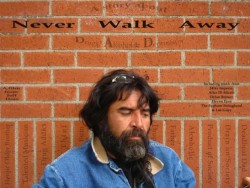
Filmmaker Jeff Hess didn't realize what he was getting himself into when he went looking for music for a soundtrack for one of his movies. He'd heard a homeless man playing guitar and thought he was pretty good, so he approached him about recording some music. And he got sucked into Mike Imperio's story because it was so much like his own he couldn't understand why he hadn't ended up the same way.


Jeff, a chemical engineer who joined the Navy right out of high school, was born in Portland, Oregon. He attended Oregon State University in Corvalis, Oregon after he got out of the service. Then what intrigued him was how we are raised, what we know, how the early influences of our lives impact us. So he followed Mike around, met his family and interviewed his sister at length. Out of his time came a full-length documentary: Never Walk Away.

"It wasn't that I planned to do a film on homelessness and found these guys," Jeff told me. "I planned to do another film and this film just happened instead."

After filming Never Walk Away and spending time with Mike and the others, he's very familiar with the issues they face — including being shot at by fraternity boys along an alley where many of the homeless collect cans.

In 2004, around the time Jeff was filming this movie, an OSU fraternity boy named Josh Grimes deliberately shot a homeless man (not Mike) in the thigh with a .22 rifle. His sentence in 2007? 400 hours of community service and $3,000 in restitution, as well as just 150 days in jail. The problem is, Josh wasn't the first nor the last to shoot at the homeless in that alley.

"They're scared," Jeff told me. "They don't know when they'll be shot at."

Having read the news accounts of the shooting and watching the movie, it angered me to see the alley where the shooting happened, and saddened to see men dumpster-diving in the alley even after the shooting. It's hard not to feel compassion for Mike and his friends, but it's also hard not to understand why the citizens of Corvalis are frustrated, angry and tired of the homeless as well.

Jeff doesn't pull any punches. His camera shows the trash and garbage and the impact of homeless camps on wetlands and the parks around Corvalis. The homeless in this movie are, as the stereotype goes, alcoholics. But they're addicts with a story as well. Some make it out, some don't. As Jeff told me, there is no simple, fast, clean or easy solution to the homeless question. But of all the videos I've seen on the chronic homeless, and on those with an alcohol or drug problem, this is the best. I've watched it three times. I hope you'll take time to do the same.

Jeff has tried unsuccessfully to show the film in Corvalis, but he's hoping that by posting it online he'll raise awareness about homelessness and start conversations among those who are quick to see the homeless as stereotypes, not people. To see the movie free in its entirely, go to: .

Photo credit: NeverWalkAway.com

Posted via email from the Un-Official Southwestern PA Re-Entry Coalition Blog

What about some ME TIME

via Prison Talk by myluv4ever on 7/25/10

What about me is the question??? We are all here for our loved ones right??? We send them packages, money, letters, our love, put money on the accts so they can call & go visit them etc. On top of that we do these things as follow:
Work
go to school
pay bills
take care of the kids such as taking/picking them up from school/daycare, making sure their homework is done, taking them to practice softball/football or dance etc
cook dinner
shopping 4 the kids/house
cleaning house
Which is GREAT!!!!!!!!!!!
After all that is said and done @..the end of the day you've sent him/her out a package, accepted a phone , wrote a letter, cooked dinner,feed the kids gave them a bath and put them to bed& cleaned the house. :)
What have you done 4 yourself. I know that for alot of us its just like a habit that we've gotten ourselves into which is not bad don't get me wrong. We have to do it:)
Just step back for a moment and ask yourself .
Sorry this thread is so long but I just would like to know if you have any ME time for youself? If so what is it that you do? If not you Deserve IT.. try it sometimes:) As for myself I put a little$$ up so I could have some ME time once every two weeks. I step away from the prison life & home and go out to dinner with a girlfriend, or buy myself a pair of socks, nice panty/bra set, get my nails done , a book etc. It dont have to be much but just a little something for yourself it will make you feel good :)

Posted via email from the Un-Official Southwestern PA Re-Entry Coalition Blog

In a Word

via Futility Closet by Greg Ross on 7/25/10

chantpleure
v. to sing and cry at the same time

Posted via email from the Un-Official Southwestern PA Re-Entry Coalition Blog

Interventions to Reduce HIV Transmission Related to Injecting Drug Use in Pr...

via New Library Documents on 7/25/10

Individuals interested in the use of drug injection intervention programs in prisons to reduce HIV transmission will want to read this article. It offers suggestions on how your agency can effectively implement intervention programs that address drug injection use, thus impacting the spread of HIV through the prison population and eventually, upon the prisoners release back to the community, the transmission to the public. Sections of this article cover: drug dependence and injecting drug use among prisoners; HIV and HVC transmission resulting from drug use in prisons; strategies to address the risks associated with drug use; and mandatory drug testing programs (MDTs).

Posted via email from the Un-Official Southwestern PA Re-Entry Coalition Blog

Under the U.S. Supreme Court: Opening prison doors for healthcare

21 July 2010

choices

Report: Two-thirds of Michigan's industrial jobs in the advanced manufacturi...


A new report says two-thirds of Michigan's industrial jobs are in the better-paying and more secure advanced manufacturing sector.

Posted via email from the Un-Official Southwestern PA Re-Entry Coalition Blog

Subtle Messages of the Courthouse

via Simple Justice by SHG on 7/21/10

A few days ago, the notion was raised that courthouses, the place where citizen jurors come to decide the fates citizen defendants, create an atmosphere that places officers in charge and on a pedestal.  We pass through magnetometers operated by marshals or court officers.  We watch as police officers roam freely, shown deference by everyone in the house because they are, after all, the embodiment of the government. 

Eric Johnson at PrawfsBlawg takes it further.

In many places around the country, the United States Attorney's office is in the same building as the federal courts. I've never liked this arrangement. Sure, it's convenient. And it probably saves the taxpayers money in many cases. But in a field where much is said about "avoiding even the appearance of impropriety," it is unseemly, I think, to have the government's advocates down the hall from the judges.
That we don't give this much, if any, thought demonstrates how ingrained our acceptance of the status quo, that they are the government and we are not, is.  We talk about the courthouse as a palace of justice.  The judges are the Kings, and the others are courtesans.  The defense is the perpetual outsider, seeking the largesse of the noblesse.

Why aren't courthouses built with some available office space for criminal defense lawyers?  How do we expect jurors to be herded through the doors and around the courthouses by court officers, who appear (if not in fact are) the first cousins of the police officers we tell them are liars? 

And as the lawyers who are in the employ of the government get to assume the name of The People, a group that includes The Jurors, does the fact that they share an elevator with the judge have any impact on their credibility and purpose?

Upon reflection the entirety of the construct suggests that to people that there is an inside and an outside within the judicial system, and we, the defense, are clearly on the outside.  Notably, we are the only group not in the direct employ of the government, though we are increasingly in its indirect employ, yet still don't get the benefit of an inside office.

A few years back, a decision was made that New York City criminal defense lawyers, who were as unworthy of trust as their clients, would be required to pass through the magnetometers like everyone else.  Everyone except cops, prosecutors and judges, that is.  It was for safety reasons.  They could be trusted.  We could not.

The president of the NYSACDL at the time, Dick Barbuto, was furious that we would be overtly signaled out as the only regular participants in the legal system who would be treated in this manner, and shot off a letter demanding the criminal defense lawyers be treated no differently than prosecutors.  The letter was not only brilliant in its incisive analysis of the situation, but incredibly forceful in its demand of the court administration that criminal defense lawyers not be treated like second (or third) class citizens.  within a few days, the administration relented, the policy ended and criminal defense lawyers were allowed to enter with their secure pass, as before.

While I've long used the word "prosecution" to refer to my adversary, rather than "People" or "Government", to avoid the taint that comes from the inherent sense that they represent the good while I represent the person accused of doing terrible harm, there are so many aspects of the courthouse construct that serve to reinforce the message that they are the trusted insiders and we, well, are not.

While there are, as Eric Johnson suggests, some sound economic and safety reasons for the status quo, there are also some subtle, and not so subtle, messages that are sent along with it.  These might be considered unintended consequences of the natural development of the criminal justice system, but it's not entirely clear that they are unintended.  It's also not quite clear that once recognized and challenged, anyone in power will lose any sleep over it.

Copyright © 2010 Simple Justice NY LLC. This feed is for personal, non-commercial use only. The use of this feed on other websites is a copyright violation. If this feed is not in your RSS feed/news reader, the page you are viewing infringes the copyright

Posted via email from the Un-Official Southwestern PA Re-Entry Coalition Blog

Barry

via InvisiblePeople.tv by invisiblepeople on 7/21/10

Barry has lived in a tunnel underneath Las Vegas for two months. The tunnels are massive storm drains running under the city. luckily, Barry has yet to experience a rainfall, but his bed and everything else are propped up several feet off the ground just in case.

It’s hard to say how many people live in the storm tunnels beneath the neon. In a way it’s safer than living out in the extreme heat, yet in another it’s like living in a weird science fiction movie. Dark, dirty and completely different than the ‘normal’ world. I’ve been to lots of places where homeless people live, and going into the tunnels was a very surreal experience.

Like many homeless people, Barry is caught in the madness of bureaucracy. Because he has been to prison many Nevada social services wont help. And because he has only lived homeless for two months he is disqualified from others. Of course, finding work is near impossible.

That does not stop him from having dreams. He wants to go to culinary arts school. He wants to better his life. He wants to get out of the dark tunnels.

Special thanks to Matthew O’Brien

Posted via email from jimuleda's posterous

Talk2Me

be here-Now!

into the Gaping Void

My Friend Flickr

Talk Gone Wrong

Drop-off Box

drop.io: simple private sharing
Powered By Blogger

plan2planet

Blog Archive